Housing Barriers Infographic

For millions of disabled people in the United States, affordable, accessible, and integrated housing remains out of reach. Rising housing costs, long waitlists for rental assistance, inaccessible housing stock, and limited community-based supports create significant barriers to independent living. Adults relying on Supplemental Security Income (SSI), in particular, often face impossible choices between paying rent, affording healthcare, or meeting basic daily needs. Addressing the disability housing crisis requires more than increasing supply—it demands policies that prioritize accessibility, affordability, and the right of disabled people to live in their communities with dignity and choice.

To learn more about Housing Equity, check out the blog:
Housing Equity: Affordable Access for Adults with Disabilities
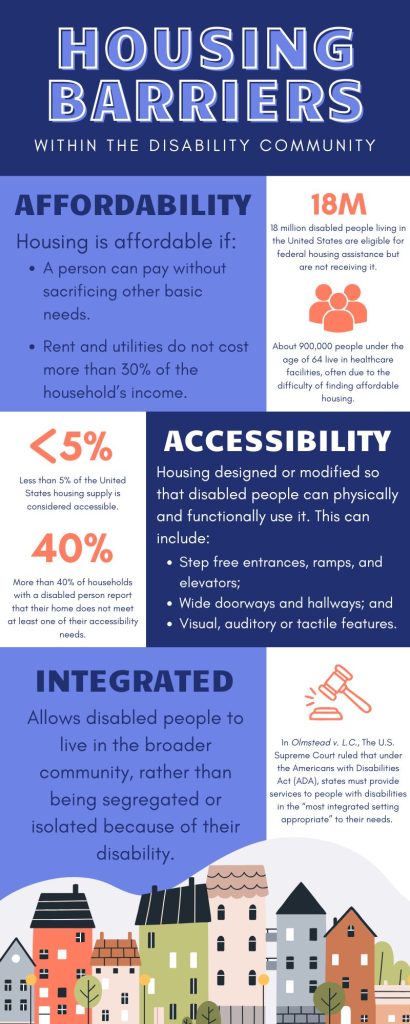
Housing Barriers: Blue infographic with white text
Housing Barriers within the Disability Community 
Affordability: Housing is affordable if: a person can pay without sacrificing other basic needs. Rent and utilities do not cost more than 30% of the household's income. 
18M: 18 million disabled people living in the United States are eligible for federal housing assistance but are not receiving it. About 900,000 people under the age of 64 live in healthcare facilities, often due to the difficulty of finding affordable housing. 
<5%: Less than 5% of the United States housing supply is considered accessible. 
40%: More than 40% of households with a disabled person report that their home does not meet at least one of their accessibility needs. 
Accessibility: 
Housing designed or modified so that disabled people can physically and functionally use it. This can include: step free entrances, ramps and elevators. 
Wide doorways and hallways; and 
visual, auditory or tactile features
Integrated: 
Allows disabled people to live in the broader community, rather than being segregated or isolated because of their disability 
(image of a gavel) 
In Olmstead v L.C., the U.S. Supreme Court ruled that under the American's with Disabilities Act (ADA), states must provide services to people with disabilities in the 'most integrated setting appropriate' to their needs. 
(image of a neighborhood of brownstone houses in a row.)

Leave a Reply

Your email address will not be published. Required fields are marked *