For millions of disabled people in the United States, affordable, accessible, and integrated housing remains out of reach. Rising housing costs, long waitlists for rental assistance, inaccessible housing stock, and limited community-based supports create significant barriers to independent living. Adults relying on Supplemental Security Income (SSI), in particular, often face impossible choices between paying rent, affording healthcare, or meeting basic daily needs. Addressing the disability housing crisis requires more than increasing supply—it demands policies that prioritize accessibility, affordability, and the right of disabled people to live in their communities with dignity and choice.
Continue readingCategory: Community Living- Infographics

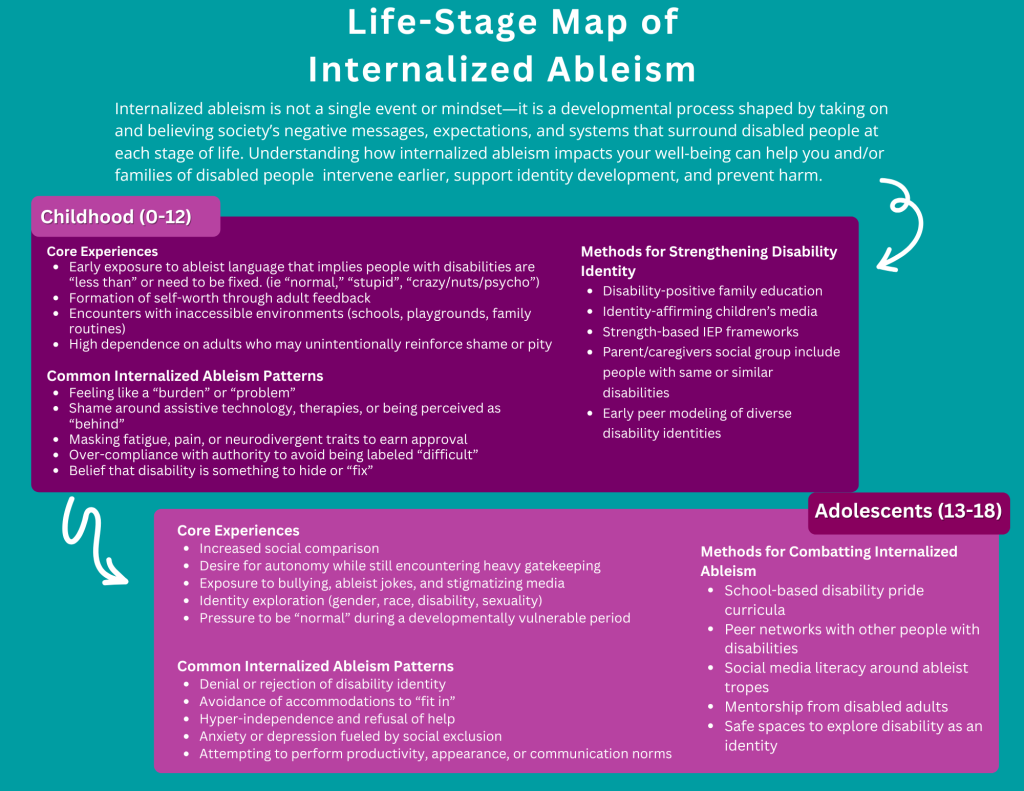
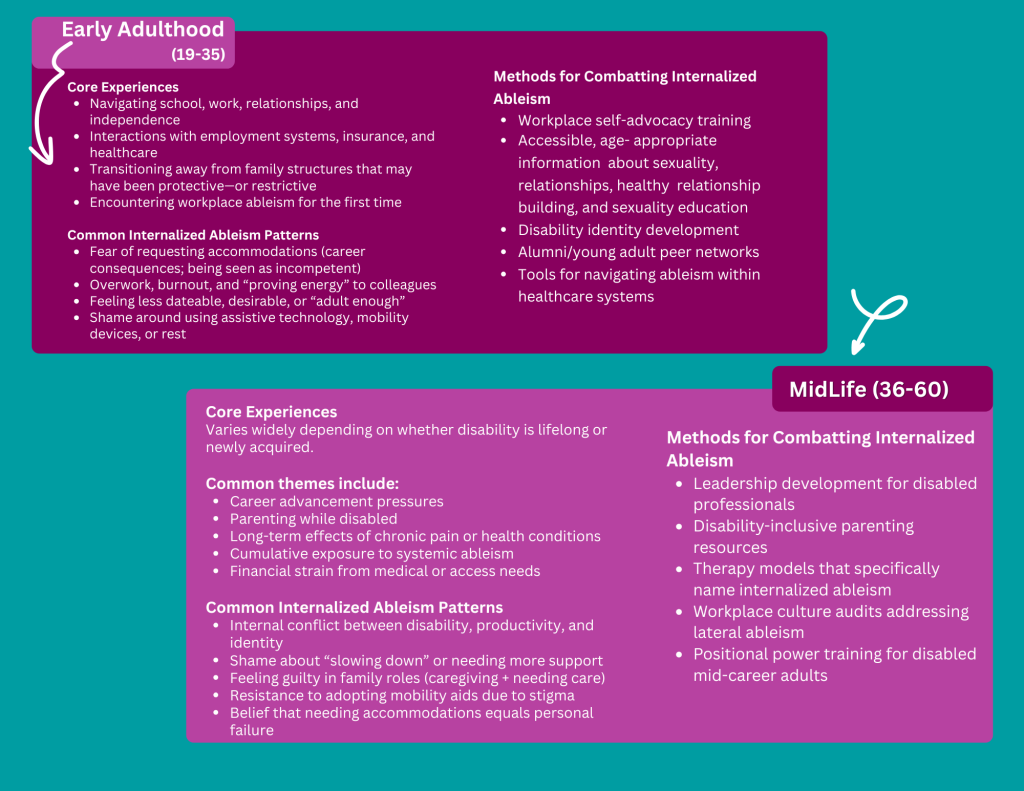
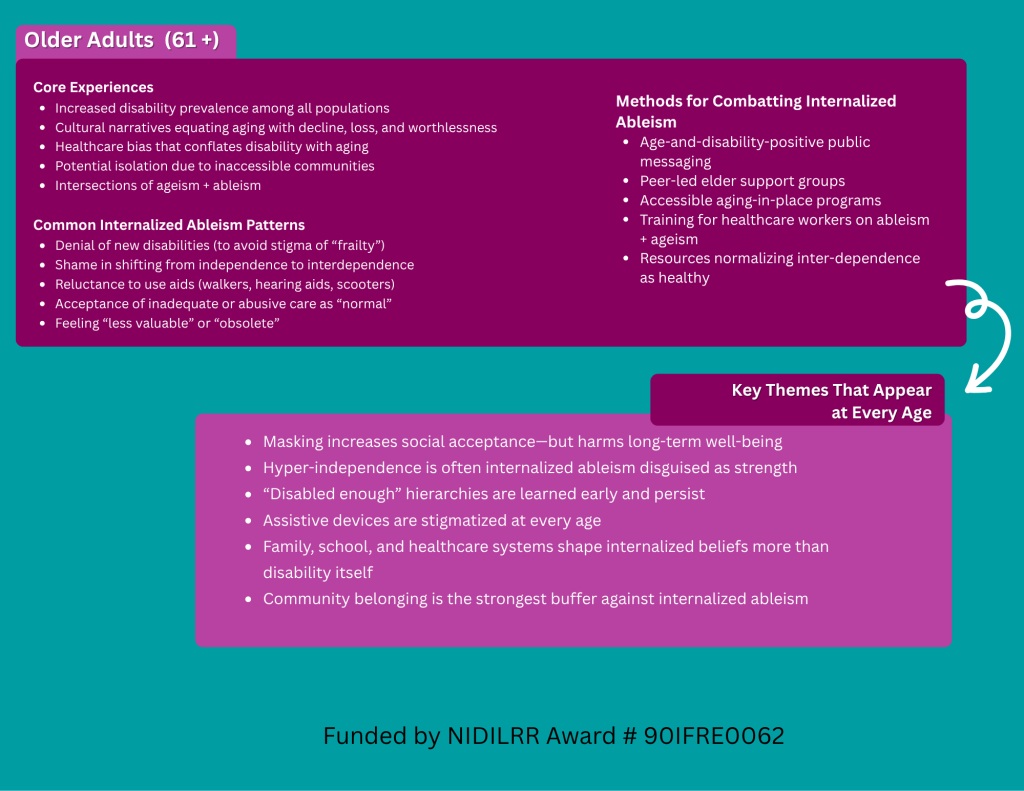
Life-Stage Map of Internalized Ableism
If ableism refers to the discrimination, marginalization, and systemic exclusion of people with disabilities, then internalized ableism occurs when disabled individuals absorb, accept, and reproduce those harmful messages about themselves—often unconsciously. This can include believing that one’s body or mind is “less than,” feeling pressure to hide or minimize disability, measuring self-worth against nondisabled standards, or assuming that access needs are burdensome or unreasonable. Internalized ableism does not arise in isolation; it is shaped by social norms, institutions, media representations, education systems, and interpersonal interactions that consistently frame disability as a problem to be fixed, pitied, or overcome.
Because ableist messaging is encountered repeatedly across a lifetime, internalized ableism can evolve and take different forms depending on a person’s age, environment, and social context. From early childhood through adulthood and into later life, as people with disabilities, we may face distinct challenges, expectations, and identity negotiations that influence how we understand ourselves and our disability. Recognizing these patterns is a crucial step toward unlearning harmful beliefs and building a more affirming, empowered sense of self.
Below you will find a life-stage map outlining some common core experiences associated with internalized ableism at different phases of life, alongside practical approaches for strengthening disability identity at each stage. This map is not meant to be universal or prescriptive, but rather a reflective tool—one that acknowledges both the diversity of disabled experiences and the possibility of growth, resistance, and self-definition over time.
A Complete Guide to Guardianship History and Modern Decision-Making Alternatives
Guardianship has evolved over centuries as societies have worked to balance protection with personal autonomy. As shown in the infographic below, early guardianship systems in places like the Roman Empire and Ancient Greece focused largely on managing property and safeguarding those unable to care for themselves. Over time, especially through English Common Law and reforms in the 19th and 20th centuries, guardianship became more structured and legally defined. Today, the hope is that modern guardianship emphasizes the well-being and rights of the individual, with many countries shifting toward more person-centered practices.
Continue reading